You compete on judgement, not headcount. Your tooling should reflect that.
A ten-person studio is held to the same commercial standard as a two-hundred-person one, and pays per-seat prices designed for the second while carrying the client risk of the first. FoundrySuite is the whole system, on your hardware, for one payment.
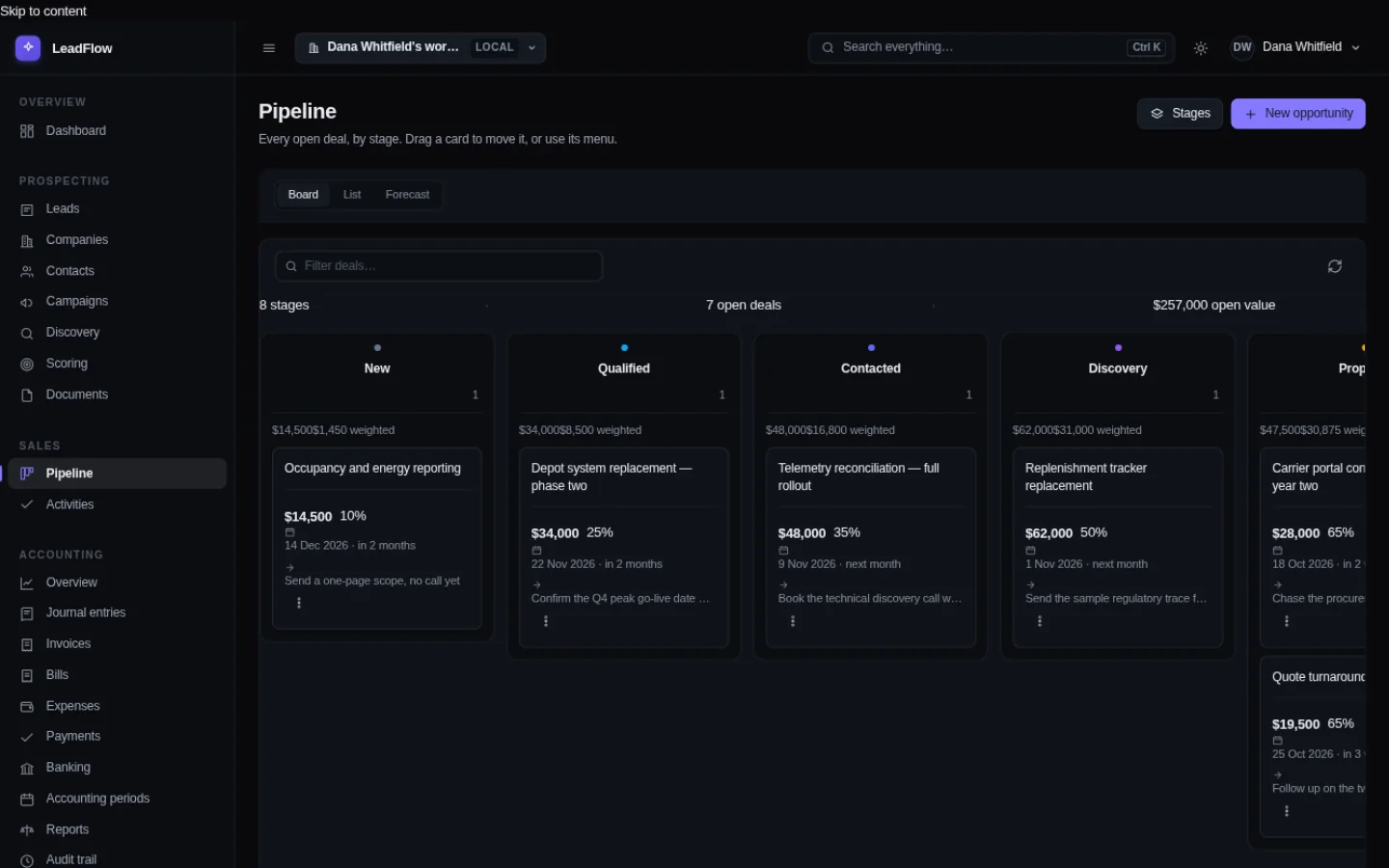
The pitch you are making, and the tools behind it
You tell a prospect you are careful, that you do not subcontract their data to five vendors on the way to an answer, and that you can tell them precisely where every piece of their information came from. Then you log into a CRM where that data sits on a vendor's servers and a collaborator's AI feature sends part of it somewhere else.
The gap between what you say and what your tooling demonstrates is the thing clients notice. FoundrySuite closes it: every value carries its origin and a source, and the records never leave the building.
What it does for an agency
- A pipeline that knows what came of what. Every lead, touchpoint and outcome in one place, so the post-mortem is a query rather than an archaeology project.
- Prospect research that takes an hour, not an afternoon. Company facts with the URL attached, deduplicated by domain.
- Proposals drafted from real research. The opening paragraph is based on what the company actually does.
- Costs, invoices and margin. Time, expenses, invoices and the ledger in the same system — so margin on a job is a number you can see, not a feeling.
- Client records you can answer for. For any record: where did this value come from? You get an answer with a source and a confidence, and your corrections are permanent.
Growth without a per-seat conversation
The number that decides a lot of agency software decisions is not the licence. It is what happens when you hire.
Onboarding is a folder
A new starter runs the same installer you did. There is no account to provision, no seat to reassign, no admin console, and no per-user licence negotiation at the point where you would rather be delivering work.
Clients are in the same system
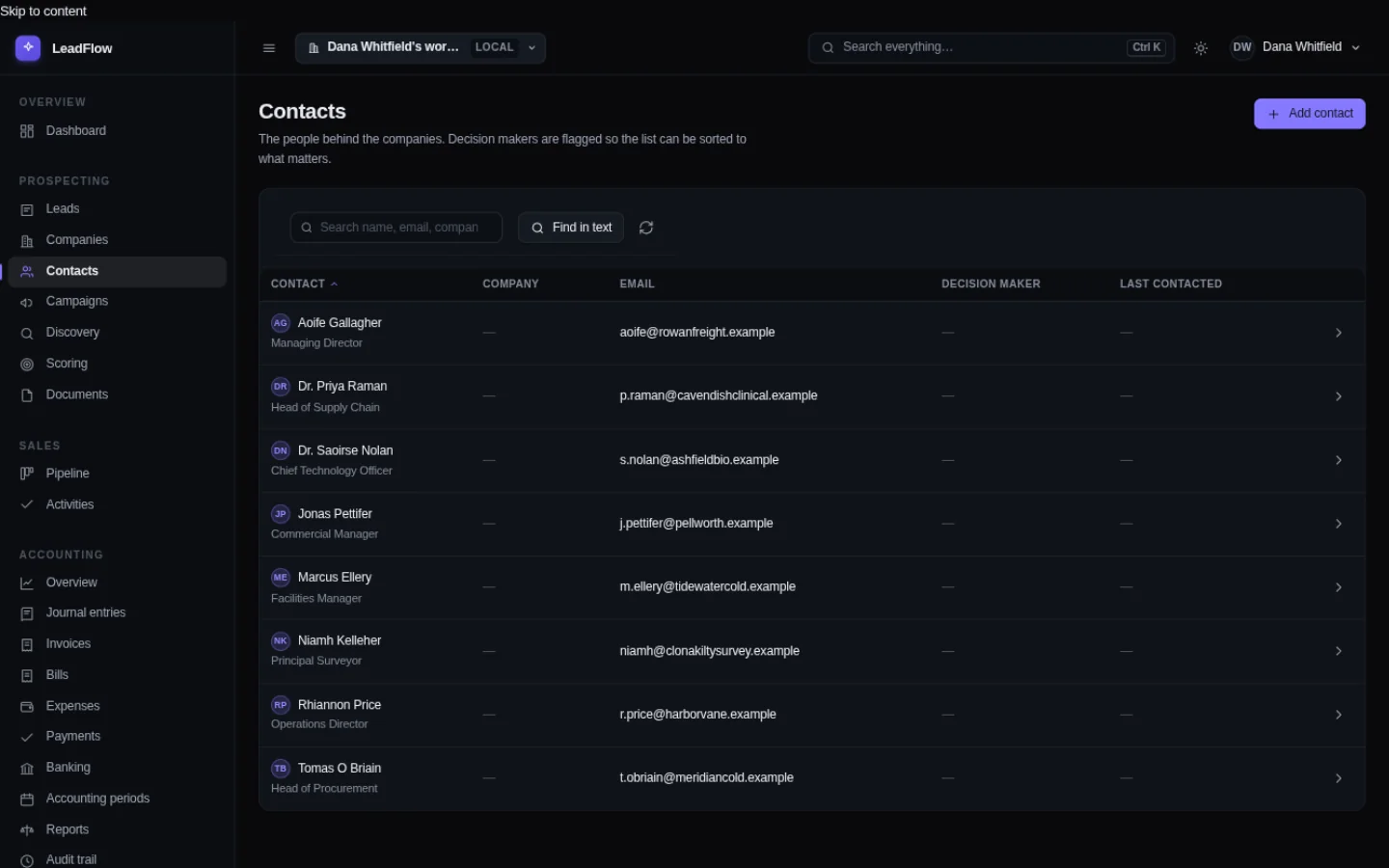
When a prospect becomes a client, the record does not need to be re-entered somewhere else with a slightly different shape. One pipeline, one set of contacts, one ledger.
Leaving is not an incident
Your whole history is a folder you can copy. That is worth more to an agency than it sounds: it is the difference between a client asking you to delete their data and you being able to answer in a sentence.
What your account manager actually sees
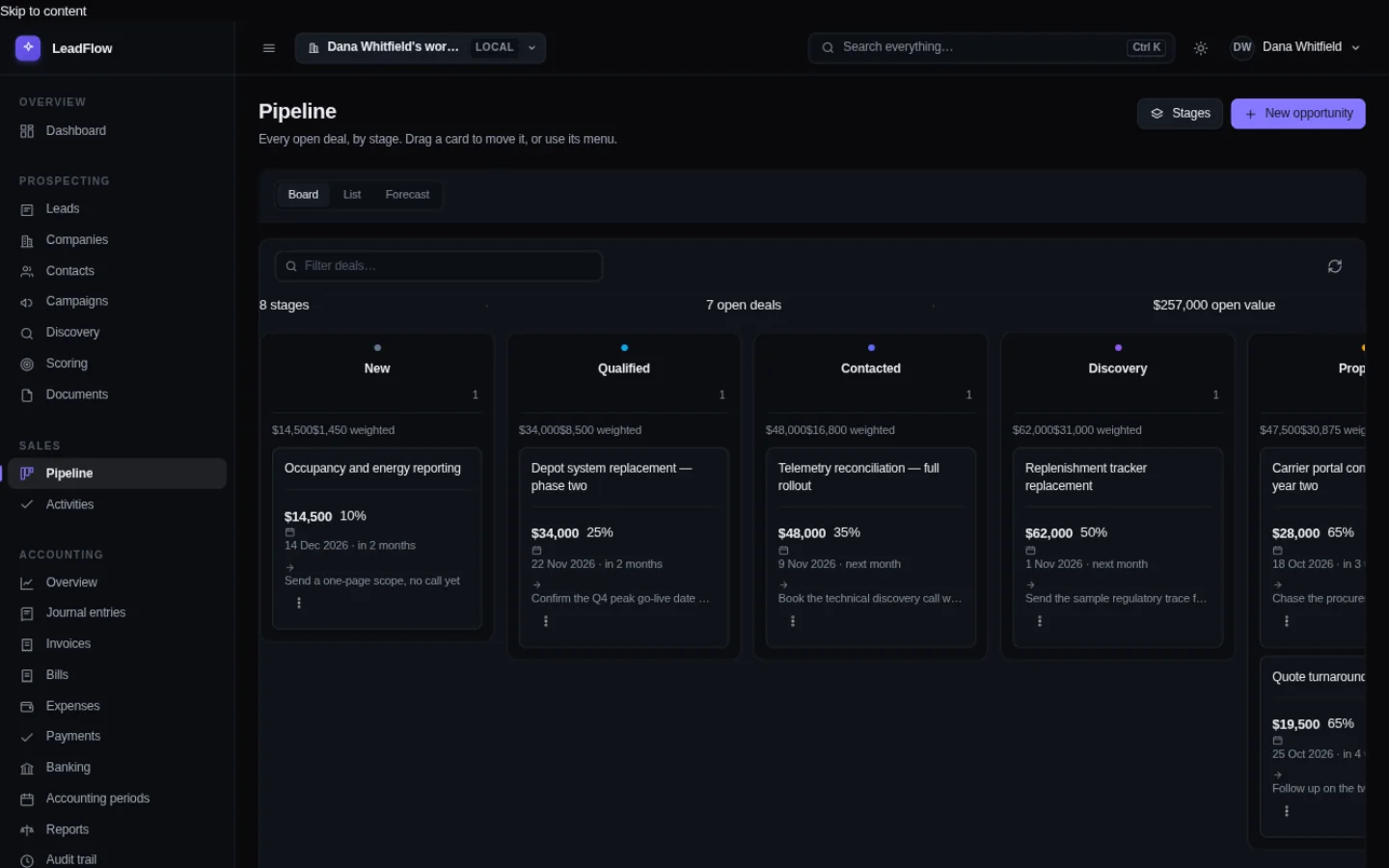
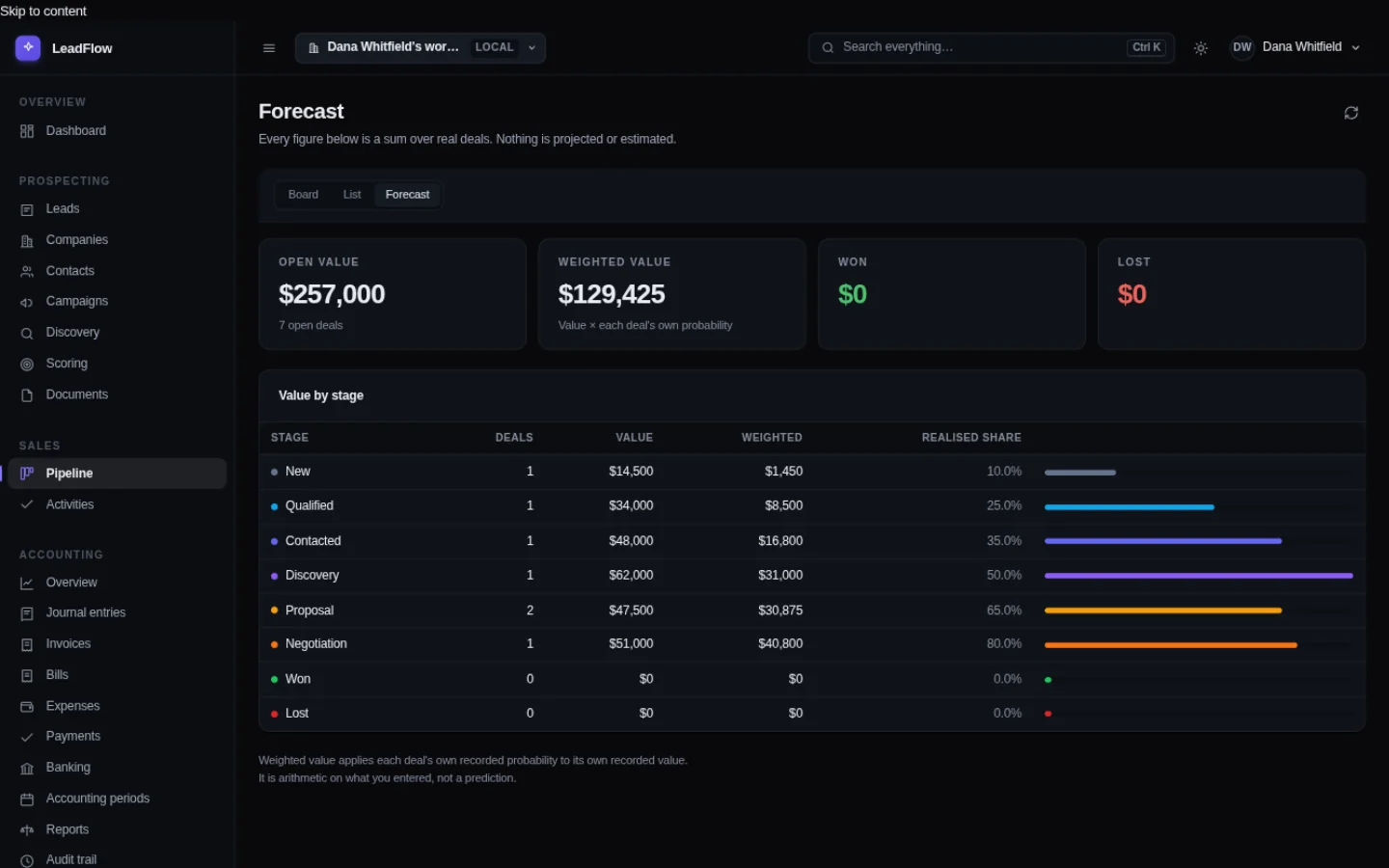
The board, with every deal's probability weighting shown as a separate number from its face value.
The AI, specifically
For an agency, the useful part is throughput: research that would take an afternoon, drafts that would take an hour, summaries of what happened on an account that nobody wrote down.
All of it runs on hardware you own, which means the argument with a client about where their brief went does not exist. And because your pitch is judgement, the boundary is worth stating plainly: it drafts, it summarises, it proposes. It cannot change a client's status, it cannot send anything, and it cannot write to the ledger without passing the same checks a person would.
What it will not do for you
- It will not win you the pitch. Being good is the part you were already doing.
- It will not manage the resourcing problem. A ten-person studio has ten people's capacity.
- It will not replace the awkward conversation about scope.
What it does is remove the excuse that you cannot compete because the tooling is priced for companies ten times your size.